

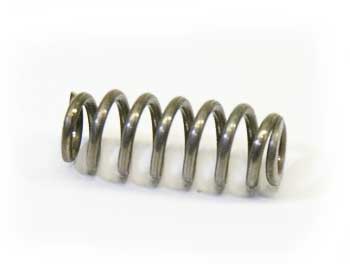
Pallet Mule Low Valve Ball Spring Heavy-Duty Carbon Steel
PU B-1-35
Guaranteed Fit. Check fit with us before you buy. If we confirm it fits your machine and it doesn’t, we’ll exchange or refund it: no restocking fee, return shipping on us. How it works
Not sure it fits? Send us your make, model and serial number and we’ll check it before you buy.
Couldn't load pickup availability
- Expert support & fitment help
- 30-day returns
- Fast Shipping
Compatibility
|
Make |
|
|---|---|
|
Model |
- |
Visit our diagram page for part references to popular models
Product Description
Pallet Mule PU B-1-35 Low Valve Ball Spring for manual pallet jack hydraulic pump assemblies. Heavy-duty oil-tempered carbon steel compression spring supersedes PUB-1-35, PTB-1-35. Designed for Pallet Mule and Wesley manual pallet jack compatibility. Extracted technical specifications and part numbers verified from manufacturer sources only.
Compatibility: Fits pallet jacks made by Pallet Mule, model PU B-1-35. Alternate model: PU B135; PU B 1 35. SKU: PU B-1-35
Specifications
Part Numbers
| OEM Part Number | PU B-1-35 |
| Manufacturer Part Number | PU B-1-35 |
| Cross-Reference Part Numbers | Supersedes PUB-1-35, PTB-1-35, PT B-1-35 |
| Equivalent Part Numbers | PUB-1-35, PTB-1-35 |
Frequently Asked Questions
Q: What manual pallet jack brands does the PU B-1-35 Low Valve Ball Spring fit?
A: The PU B-1-35 is compatible with Pallet Mule and Wesley brand manual pallet jacks. It supersedes part numbers PUB-1-35 and PTB-1-35, and is equivalent to PTB-1-35.
Q: What material composition does the PU B-1-35 spring have?
A: The PU B-1-35 is a heavy-duty compression spring manufactured from oil-tempered carbon steel. This material ensures long-term reliability and consistent spring performance under hydraulic pump assembly operating conditions.
Q: Where is the PU B-1-35 located in the hydraulic system?
A: The PU B-1-35 is positioned in the low valve ball assembly of the manual pallet jack hydraulic pump. It functions as a compression spring that controls the operation of the low-pressure valve ball.
Q: Can the PU B-1-35 replace PUB-1-35 or PTB-1-35?
A: Yes. The PU B-1-35 supersedes both PUB-1-35 and PTB-1-35. These part numbers are interchangeable and represent the same component across different manufacturers or historical designations.
Q: What is the lifespan of the PU B-1-35 spring?
A: The heavy-duty oil-tempered carbon steel construction provides extended service life under normal operating conditions. Spring degradation typically occurs over years of use. Monitor for reduced valve responsiveness or leaking hydraulic fluid as indicators that spring replacement may be needed.