

Micro Switch for Electronic Devices
SW-33
Guaranteed Fit. Check fit with us before you buy. If we confirm it fits your machine and it doesn’t, we’ll exchange or refund it: no restocking fee, return shipping on us. How it works
Not sure it fits? Send us your make, model and serial number and we’ll check it before you buy.
Couldn't load pickup availability
- Expert support & fitment help
- 30-day returns
- Fast Shipping
Compatibility
|
Make |
- |
|---|---|
|
Model |
- |
Visit our diagram page for part references to popular models
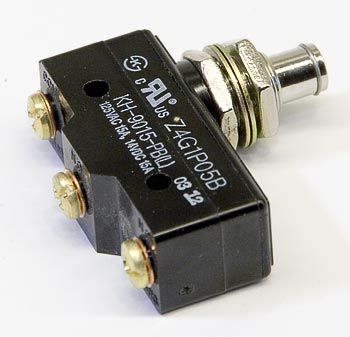
Product Description
MICRO SWITCH
Frequently Asked Questions
Q: What is the function of the SW-33 micro switch on lift trucks?
A: The SW-33 is a micro switch used for position sensing and circuit control in electric lift truck hydraulic or tilt systems. It detects endpoint positions or safety conditions and sends signals to the control system.
Q: Which lift truck models are compatible with SW-33?
A: The SW-33 fits electric lift trucks from Crown, Toyota, Raymond, and Jungheinrich. Verify your truck model, serial number, and circuit application to confirm the correct part.
Q: What are the physical and electrical specifications for SW-33?
A: The SW-33 is a standard micro switch with specifications matching common lift truck control circuits. Mounting bracket, terminal type, and actuation method vary by application. Confirm specifications match your equipment before ordering.
Q: How do I know if the SW-33 needs replacement?
A: Replace the SW-33 if circuit functions fail to activate, remain stuck in one state, or if continuity testing shows no electrical connection. Mechanical wear or corrosion inside the switch housing causes premature failure.
Q: What is the expected service life of the SW-33?
A: The SW-33 typically operates reliably for 2500 to 4500 hours of truck operation. Service life depends on cycle frequency, mounting location exposure to moisture, and mechanical stress. Regular inspection detects wear before failure.