

Pump Spring for Mighty Lift ML55-II & ML55L
ML A302
Couldn't load pickup availability
- Expert support & fitment help
- 30-day returns
- Fast Shipping
Compatibility
|
Make |
|
|---|---|
|
Model |
|
Visit our diagram page for part references to popular models
Product Description
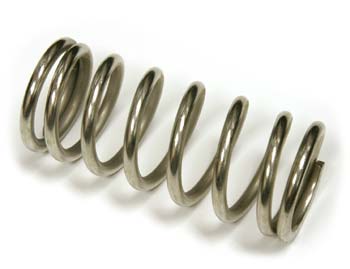
ML A302 is an OEM pump spring manufactured by Mighty Lift for manual pallet jack hydraulic units, specifically designed for compatible installation in ML55-II and ML55L models. This component functions to return the pump lever to neutral, utilizing carbon steel construction for durability in demanding material handling environments. No cross-reference or superseding part numbers are available for this SKU, ensuring precise part replacement for critical assembly.
Compatibility: Fits pallet jacks made by Mighty Lift, model ML55-II & ML55L. Alternate model: ML55II & ML55L; ML55 II & ML55L. SKU: ML A302
Specifications
Dimensional Specifications
| Compatible Mounting Location | Hydraulic pump mechanism, Mighty Lift ML55-II and ML55L models |
Part Numbers
| Manufacturer Part Number | ML A302 |
| Compatible Models | ML55-II, ML55L |
| OEM Part Number | ML A302 |
Frequently Asked Questions
Q: What is the ML A302 pump spring?
A: The ML A302 is an OEM pump spring manufactured by Mighty Lift for manual pallet jack hydraulic units. It is a carbon steel component designed to return the pump lever to neutral position in the hydraulic pump mechanism.
Q: Which pallet jack models does the ML A302 fit?
A: The ML A302 is compatible with Mighty Lift ML55-II and ML55L manual pallet jack models. It fits directly in the hydraulic pump assembly for these units.
Q: What material is the ML A302 made from?
A: The ML A302 pump spring is constructed from carbon steel, which provides durability and corrosion resistance in demanding material handling environments with frequent hydraulic cycling.
Q: Are there cross-reference or superseding part numbers for the ML A302?
A: No cross-reference or superseding part numbers are available for the ML A302. This is a direct OEM part with no alternate SKUs, ensuring precise identification for replacement.
Q: What symptoms indicate the ML A302 pump spring needs replacement?
A: Replace the ML A302 if the pump lever does not return to neutral position smoothly, stays stuck in the raised position, or if you notice weak hydraulic pressure and slow lifting after normal operation.