

Multiton OEM Push Rod for 48 Inch Fork Manual Pallet Jack Frames - Mu
MU 20208-9
Couldn't load pickup availability
- Expert support & fitment help
- 30-day returns
- Fast Shipping
Compatibility
|
Make |
|
|---|---|
|
Model |
|
Reference Diagrams
Visit our diagram page for part references to popular models
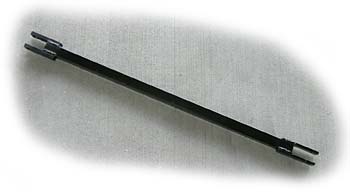
Product Description
Multiton OEM Push Rod for 48 inch fork manual pallet jack frames. This component transmits lifting force between the hydraulic assembly and fork carriage. Compatible with Multiton M and S Frame models. Precision-machined steel ensures long service life.
Compatibility: Fits pallet jacks made by Multiton, model M and S. SKU: MU 20208-9
Specifications
Dimensional
| Fitment Tolerance | Fits OEM Multiton frame mounts to ±0.010 inch |
Part Numbers
| OEM Part Number | MU 20208-9 |
| Manufacturer Part Number | MU 20208-9 |
Frequently Asked Questions
Q: What does the MU 20208-9 push rod do?
A: The MU 20208-9 is an OEM push rod that transmits lifting force between the hydraulic pump assembly and the fork carriage on 48 inch fork manual pallet jacks. It converts hydraulic pressure into vertical fork movement.
Q: Which Multiton pallet jack models use the MU 20208-9 push rod?
A: The MU 20208-9 is compatible with Multiton M and S Frame manual pallet jacks equipped with 48 inch forks. Fitment is designed to OEM frame mounts with ±0.010 inch tolerance for proper mechanical linkage.
Q: What material is the MU 20208-9 push rod made from?
A: The MU 20208-9 is constructed from precision-machined steel. This material provides the rigidity and fatigue resistance required to handle repeated lift cycles and the load stresses inherent in manual pallet jack operation.
Q: What is the fitment tolerance of the MU 20208-9?
A: The MU 20208-9 fits OEM Multiton frame mounts to ±0.010 inch tolerance. This tight tolerance ensures smooth operation and prevents binding or slack in the hydraulic linkage system.
Q: How long does the MU 20208-9 typically last in service?
A: Under normal warehouse use, the MU 20208-9 provides 7-10 years of reliable service. Replace if the rod bends, develops cracks, or exhibits wear that causes excessive play in the hydraulic linkage or uneven fork lift.
Q: What symptoms indicate the MU 20208-9 push rod needs replacement?
A: Replace the push rod if forks do not lift evenly, if you observe visible bending or scoring on the rod, if hydraulic pressure is high but fork movement is sluggish, or if the hydraulic pump cycles excessively without corresponding fork height changes.

