

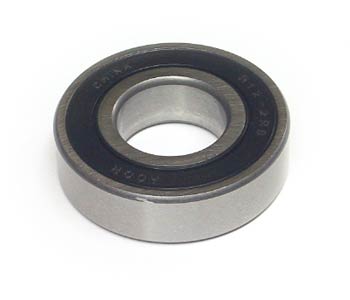
Bearing Sleeve 1.625 inch OD 0.750 inch ID 0.433 inch Width
BS 018-500
Guaranteed Fit. Check fit with us before you buy. If we confirm it fits your machine and it doesn’t, we’ll exchange or refund it: no restocking fee, return shipping on us. How it works
Not sure it fits? Send us your make, model and serial number and we’ll check it before you buy.
Couldn't load pickup availability
- Expert support & fitment help
- 30-day returns
- Fast Shipping
Compatibility
|
Make |
- |
|---|---|
|
Model |
- |
Visit our diagram page for part references to popular models
Product Description
OD: 1.625 inch or 41.25MM; ID: 0.750 inch or 19.05MM; Width: 0.433 inch or 11MM
Frequently Asked Questions
Q: What are the exact dimensions of the BS 018-500 bearing?
A: The BS 018-500 bearing has an outer diameter of 1.625 inches (41.25 millimeters), an inner diameter or bore of 0.750 inches (19.05 millimeters), and a width of 0.433 inches (11 millimeters). These dimensions are critical for proper fit. Verify these specs match your equipment before ordering to avoid compatibility issues.
Q: What type of bearing is the BS 018-500?
A: The BS 018-500 is a radial ball bearing, meaning it supports loads perpendicular to the shaft and is designed for general-purpose material-handling applications. The small bore size and compact width make it suitable for load wheels, steer wheels, and drive components in manual and electric pallet jacks, and light-duty forklifts.
Q: Is the BS 018-500 bearing sealed or unsealed?
A: Specifications for the BS 018-500 do not indicate seal type in the dimensions provided. Contact us to confirm whether this bearing is open, shielded, or sealed with rubber or metal shields. Seal type affects dust and water ingress protection and is critical for selecting the correct bearing for wet or contaminated environments.
Q: What materials are used in the BS 018-500 bearing?
A: Material composition for the BS 018-500 is not specified in the current product data. Standard radial ball bearings this size are typically manufactured from chrome steel (AISI 52100) for races and balls, with optional nitrile rubber seals. Confirm material specs with us to verify corrosion resistance for your application.
Q: What load capacity does the BS 018-500 bearing have?
A: Dynamic and static load ratings for the BS 018-500 are not provided in the current specifications. These ratings are essential for material-handling applications. Contact us for the complete bearing specification sheet, which will include dynamic load rating, static load rating, and recommended speed limits to ensure safe operation under your load conditions.