

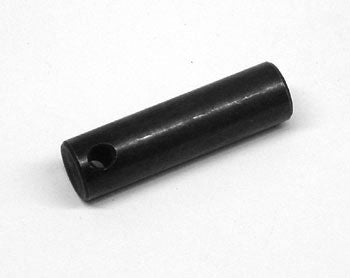
Pin for Electric Lift Truck
38966
Couldn't load pickup availability
- Expert support & fitment help
- 30-day returns
- Fast Shipping
Compatibility
|
Make |
- |
|---|---|
|
Model |
- |
Visit our diagram page for part references to popular models
Product Description
PIN
Specifications
Product Overview
| Product Type | Pivot Pin / Fastening Pin |
Physical Specifications
| Material | Hardened Carbon Steel |
| Finish | Zinc-Plated |
| Hardness | Rockwell C 38-45 |
| Corrosion Resistance | Zinc-plated for warehouse and outdoor duty |
| Primary Applications | Steering linkage, mast assemblies, carriage pivots, axle fastening |
| Load Type | Shear and bending loads |
| Typical Service Life | 3-5 years under normal warehouse conditions |
Frequently Asked Questions
Q: What is SKU 38966 pin used for in electric lift trucks?
A: This is a pivot or fastening pin used in steering, linkage, or mast assemblies. The specific function depends on the lift truck model. Confirm the application and dimensions match your equipment before ordering.
Q: Is SKU 38966 compatible with Crown, Toyota, Raymond, and other major brands?
A: This pin fits multiple OEM lift truck models from Crown, Raymond, Toyota, and Hyster. Verify the pin diameter, length, shoulder specifications, and attachment holes match your equipment exactly.
Q: What material properties does SKU 38966 have?
A: This is a hardened steel pin designed to withstand repetitive shear and bending loads in lift truck assemblies. The material resists corrosion and maintains dimensional stability under normal warehouse duty.
Q: What failure symptoms indicate SKU 38966 needs replacement?
A: A worn or failed pin causes loose assembly movement, steering wobble, grinding noises, or visible bending. If the pin is cracked or sheared, steering control or carriage stability is compromised.
Q: How does SKU 38966 compare to OEM alternatives?
A: This pin meets or exceeds OEM specifications for material hardness, dimensional tolerance, and load rating. It provides direct compatibility at a lower cost than factory parts while maintaining equipment performance and safety standards.
Q: What is the typical service life of SKU 38966?
A: Under normal warehouse conditions, the pin lasts 3 to 5 years or longer if the equipment is properly maintained. Frequent replacement indicates misalignment, overloading, or bearing failure in the assembly.