

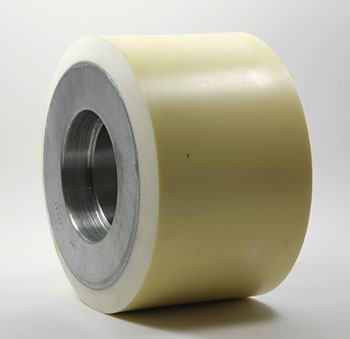
6 in. x 4 in. Polyurethane Load Wheel Assembly for Electric Lift
SU 666-XL
Couldn't load pickup availability
- Expert support & fitment help
- 30-day returns
- Fast Shipping
Compatibility
|
Make |
- |
|---|---|
|
Model |
- |
Visit our diagram page for part references to popular models
Product Description
Polyurethane load wheel assembly SU 666-XL, engineered for electric lift trucks, features a 6-inch poly tread with a 4-inch width, XL3™ bonding to a steel core, optimized for extreme durability and maximum load cycles. Contains multiple cross-reference part numbers for inter-brand compatibility and maintenance planning.
Specifications: 6.000 inch diameter x 4.000 inch width (6.000" x 4.000" | 6 x 4 wheel | 6 x 4 | 152.40mm x 101.60mm)
Specifications
Material & Construction
| Core Material | Steel core with proprietary surface finishing |
| Bonding Method | XL3™ proprietary polyurethane-to-steel bonding |
Mechanical Specifications
| Tread Material | High-performance polyurethane compound |
| Compound | Polyurethane, XL3™ bonding technology |
Part Numbers & Compatibility
| Manufacturer Part Number | SU 666-XL |
| Alternate Part Number | SU 666-XL-A |
| Cross-Reference Part Numbers | L500666R, L500666A1, L501200R, L509163-CG, L500666RA1 |
Wheel Dimensions
| Material | Cushothane EZ |
| Outside Diameter | 6 |
| Inside Diameter | 2.5 |
| Width Side to Side | 4 |
| Tread Profile | Angle |
| Bore Depth | 0.68 |
| Hub Width | 4 |
| Bore Outside Diameter | 2.8341 |
Frequently Asked Questions
Q: What are the cross-reference part numbers for the SU 666-XL polyurethane wheel?
A: The SU 666-XL is equivalent to L500666R, L500666A1, L501200R, L509163-CG, and L500666RA1 across different lift truck manufacturers. Confirm the cross-reference matches your truck model before ordering. Cross-referencing ensures you get the correct wheel width, diameter, and hub configuration.
Q: What makes the XL3 bonding technology different from standard polyurethane wheels?
A: XL3 is a proprietary thermal bonding process that fuses the high-performance polyurethane tread directly to the steel core. This creates a more durable bond than mechanical adhesive, reducing tread separation and extending wheel life in extreme-duty warehouse environments. XL3-bonded wheels withstand higher cycle counts and loads without delaminating.
Q: Can the SU 666-XL wheel be used on a truck that originally had a different tread material?
A: Yes, as long as the wheel diameter (6 inches) and width (4 inches) match your truck specifications. Polyurethane wheels are a direct upgrade from nylon or rubber wheels. However, all four wheels should ideally be the same material and compound to maintain even wear and balanced steering. Mixing wheel materials can cause pulling or uneven tread wear.
Q: How long does an SU 666-XL wheel typically last in heavy-duty warehouse use?
A: Expected lifespan is 2 to 4 years depending on operating conditions, load cycles, floor surface, and maintenance. Concrete floors wear wheels faster than tile or resin floors. The XL3-bonded polyurethane compound is engineered for maximum durability, but tread will eventually wear flat. Inspect quarterly for wear and replace when tread depth reaches 1/8 inch.
Q: Does the SU 666-XL require sealed bearings, and how do I check bearing condition?
A: The SU 666-XL includes sealed bearings as part of the assembly. Check bearing condition by spinning the wheel by hand and listening for grinding noise or feeling for binding resistance. If the wheel does not spin freely or makes noise, the bearings have failed and the wheel assembly must be replaced. Do not attempt to repack sealed bearings.
Q: What floor surface conditions are best for polyurethane wheels like the SU 666-XL?
A: Polyurethane wheels perform best on smooth, clean concrete or resin floors. They provide excellent traction and load support on dry surfaces. Avoid using polyurethane wheels on wet, oily, or loose debris-covered floors, as traction will decrease. If your warehouse has wet areas, confirm polyurethane is suitable before purchase or consider alternative tread compounds.