

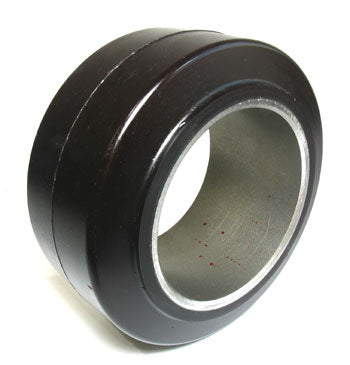
Wheel for Electric Lift Truck
SU 10.5x5x6.5-SF-P
Couldn't load pickup availability
- Expert support & fitment help
- 30-day returns
- Fast Shipping
Compatibility
|
Make |
- |
|---|---|
|
Model |
- |
Visit our diagram page for part references to popular models
Product Description
Poly Press-On
Specifications: 10.500 inch diameter x 5.000 inch width (10.500" x 5.000" | 10.5 x 5.0 wheel | 10-1/2 x 5 | 266.70mm x 127.00mm)
Specifications
Wheel Specifications
| Outside Diameter (in) | 10.500 |
| Width (in) | 5.000 |
| Outside Diameter (mm) | 266.70 |
| Width (mm) | 127.00 |
| Drive Tire Profile | Smooth Flat |
| Material | Polyurethane |
Frequently Asked Questions
Q: What is the difference between SU 10.5x5x6.5-SF-P and SU 10.5x4x8-TSW-P?
A: SU 10.5x5x6.5-SF-P and SU 10.5x4x8-TSW-P are different tires for different applications. Both have 10.500 inch diameter but differ in width (5 inch versus 4 inch) and rim size (6.5 inch versus 8 inch). SF means smooth flat profile while TSW means tapered side wall. SF tires provide more load bearing area and stability while TSW tires are designed for steering control. Do not interchange these tires. Use SF on rear wheels requiring load capacity and TSW on steer wheels. Verify your truck position requirement before ordering.
Q: Is SU 10.5x5x6.5-SF-P compatible with 8 inch rim cores?
A: No. SU 10.5x5x6.5-SF-P is engineered specifically for 6.5 inch rim cores. The x6.5 designation indicates rim diameter. This tire cannot be pressed onto an 8 inch core because the bore diameter does not match. Attempting to force fit will damage both tire and rim. Always match the rim size in the part number to your actual rim dimensions. If you have 8 inch rims, order a different tire variant designed for that size. Consult your truck nameplate to confirm your rim size.
Q: Why choose smooth flat profile over tapered side wall for SU 10.5x5x6.5-SF-P?
A: Smooth flat (SF) profile tires distribute load evenly across tire width, maximizing load carrying capacity and floor contact. This makes SF ideal for rear wheels and load-bearing positions. SF tires also provide better straight-line stability and reduce rolling resistance on smooth floors. Tapered side wall (TSW) tires are narrower on the sides, reducing floor contact but allowing tighter steering control on steer wheels. Choose SF when your truck position prioritizes load capacity and stability over maneuverability. Always follow your OEM specification for correct tire selection by position.
Q: What is the width measurement for SU 10.5x5x6.5-SF-P and why does it matter?
A: SU 10.5x5x6.5-SF-P has a 5.000 inch width (127.00 millimeters). Width matters because it determines the tire footprint and load distribution. A 5 inch wide tire contacts more floor area than a 4 inch tire, distributing weight more evenly and reducing pressure per square inch. This allows heavier loads without causing tire deformation or floor damage. Wider tires also track straighter with less side-to-side wobble. Always order the exact width specified on your truck nameplate. A 5 inch tire will not fit properly on a rim designed for 4 inch tires.
Q: How does polyurethane material affect performance of SU 10.5x5x6.5-SF-P compared to rubber?
A: Polyurethane tires like SU 10.5x5x6.5-SF-P are lighter weight, more durable against abrasion, and provide lower rolling resistance than rubber. Polyurethane runs cooler and requires less maintenance. However, polyurethane is firmer than rubber, producing more vibration on rough floors. Polyurethane performs better indoors on smooth concrete. Rubber tires absorb shock better and work better on outdoor or rough surfaces. For warehouse indoor use with smooth flooring, polyurethane is typically preferred. For mixed terrain or outdoor applications, rubber offers better comfort and traction.
Q: What maintenance schedule should I follow for SU 10.5x5x6.5-SF-P wheels?
A: Inspect polyurethane tires every 250 operating hours for wear, cracks, flat spotting, or chunking. Clean tires regularly to remove debris that can cause punctures or abrasion. Check tire pressure if equipped with pneumatic valve (though solid polyurethane tires have no air). Rotate wheels between positions every 1,000 hours to equalize wear. Monitor for unusual vibration or noise indicating wear or rim damage. Replace immediately if tread depth appears reduced by 25 percent, if sidewall cracks are visible, or if the core becomes exposed. Keep detailed maintenance records to predict replacement intervals.