
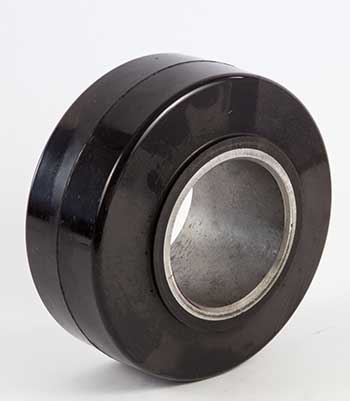
8.5 x 4 Poly Press-On for Electric Lift Truck
SU 8.5X4X4-SF-P
Couldn't load pickup availability
- Expert support & fitment help
- 30-day returns
- Fast Shipping
Compatibility
|
Make |
- |
|---|---|
|
Model |
- |
Visit our diagram page for part references to popular models
Product Description
***Pricing good while supplies last***
Specifications: 8.500 inch diameter x 4.000 inch width (8.500" x 4.000" | 8.5 x 4 wheel | 8-1/2 x 4 | 215.90mm x 101.60mm)
Specifications
Wheel Specifications
| Outside Diameter (in) | 8.500 |
| Width (in) | 4.000 |
| Outside Diameter (mm) | 215.90 |
| Width (mm) | 101.60 |
| Drive Tire Profile | Smooth Flat |
| Material | Polyurethane |
Frequently Asked Questions
Q: What does press-on mean for the SU 8.5X4X4-SF-P polyurethane wheel?
A: Press-on means the polyurethane tire is mounted directly onto your existing axle hub without a separate rim. The tire slides over the hub shaft and is held in place by friction and sometimes a retaining clip. This design is lower cost than a full assembly but requires that your axle hub is in good condition. Press-on wheels cannot be used if your hub is damaged or oversized.
Q: Is SU 8.5X4X4-SF-P compatible with rubber wheel hubs?
A: No. The SU 8.5X4X4-SF-P polyurethane press-on is designed for standard steel hubs or aluminum hubs with the correct bore size. If your truck currently uses rubber wheel assemblies like the SF-R-A, your axle hub is integrated into that assembly. You cannot use press-on wheels without replacing the entire axle setup. Verify your axle hub type before ordering press-on wheels.
Q: What are the performance differences between polyurethane SF-P and rubber SF-R wheels?
A: Polyurethane (SF-P) is harder and more durable than rubber (SF-R). Polyurethane resists cuts, abrasion, and oil staining. It lasts 1.5 to 2 times longer than rubber on dry concrete floors. Rubber offers better grip on smooth or wet floors and runs quieter. Polyurethane generates more noise and heat at high speeds. Choose polyurethane for outdoor or rough surfaces. Choose rubber for indoor warehouse floors where grip matters. Pricing is typically lower for rubber.
Q: How do I install a press-on wheel if I am unsure about axle hub compatibility?
A: Measure your axle hub bore diameter with calipers. The SU 8.5X4X4-SF-P fits standard 0.875 inch to 1.125 inch bore hubs depending on your truck model. Consult your truck manual or contact the manufacturer with your truck model number. Do not force press-on wheels onto hubs that are too large or too small. An improper fit causes the wheel to slip or wear unevenly. When correct fit is confirmed, align the wheel on the hub and press it on evenly using a hydraulic press or bearing puller.
Q: What symptoms indicate a press-on wheel is failing or needs removal?
A: If the wheel slips or spins on the hub during operation, the press-on fit has failed. Check for cracks or chunks missing from the polyurethane. Worn flat spots mean the wheel cannot grip the drive motor. If the wheel rotates roughly or makes grinding noise, the bearing is damaged. Most importantly, if the wheel wobbles side to side, it must be removed immediately to prevent truck damage. Replace or remount the wheel with proper alignment.
Q: How should I store and handle polyurethane press-on wheels to prevent damage?
A: Store press-on wheels upright or flat in a cool, dry location away from direct sunlight. Do not stack heavy items on top of wheels as this can flatten the polyurethane permanently. Keep wheels away from oils, solvents, and chemicals unless they are polyurethane-safe. High temperatures above 140 degrees Fahrenheit can degrade polyurethane. Inspect wheels before installation for cracks or flat spots from storage. Wheels stored properly for 2 to 3 years do not degrade significantly.