

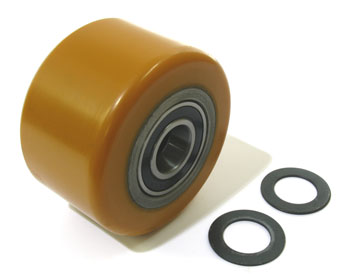
Polyurethane Wheel for Electric Lift Truck
204274
Couldn't load pickup availability
- Expert support & fitment help
- 30-day returns
- Fast Shipping
Compatibility
|
Make |
- |
|---|---|
|
Model |
- |
Visit our diagram page for part references to popular models
Product Description
Premium polyurethane wheel designed for electric lift trucks and material handling equipment. Engineered for superior load capacity, abrasion resistance, and long-term performance on hard warehouse floors. Polyurethane construction resists oils, chemicals, and moisture better than rubber, making it ideal for consistent indoor facility use. Direct replacement for many Crown, Toyota, Raymond, and Yale lift truck applications.
Specifications
Physical Specifications
| Material | Polyurethane |
| Load Capacity | Varies by diameter and bore size (verify with equipment manual) |
| Abrasion Resistance | High — resists oils, chemicals, and moisture |
| Temperature Range | Optimized for climate-controlled indoor warehouse environments |
| Wear Characteristics | Expected lifespan 2-4 years in medium-duty use; longer on smooth, clean concrete |
| Inspection Frequency | Quarterly inspection recommended for wear, cracks, and flat spots |
Compatibility
| Applications | Electric forklifts, electric pallet jacks, reach trucks, order pickers, stackers |
Frequently Asked Questions
Q: What equipment types does this polyurethane wheel fit?
A: This polyurethane wheel is compatible with electric lift trucks from Crown, Toyota, Raymond, Yale, Hyster, and similar manufacturers. Verify the wheel bore diameter and axle width match your equipment before ordering. Wheel diameter and load capacity vary by specific model.
Q: What are the material properties of this polyurethane wheel?
A: Polyurethane wheels offer high load capacity, abrasion resistance, and durability on hard warehouse floors. They resist oils and chemicals better than rubber and maintain consistent performance in temperature-controlled environments. These wheels are not designed for severe outdoor use or extreme temperature fluctuations.
Q: How long does a polyurethane wheel typically last in service?
A: Lifespan depends on load, floor conditions, and operating hours. Well-maintained polyurethane wheels typically last 2 to 4 years in medium-duty warehouse environments. Wheels on flat, clean concrete last longer than those on rough or wet floors. Inspect wheels quarterly for wear, cracks, or flat spots.
Q: What maintenance does this polyurethane wheel require?
A: Keep wheels clean and free of debris. Wipe down periodically to prevent oil or chemical buildup. Check wheel bearings for smooth rotation and replace if grinding or binding occurs. Do not use wire brushes or abrasive cleaners that damage the polyurethane surface.
Q: How do I identify the correct wheel bore diameter and size for my equipment?
A: Consult your equipment's parts manual or specification plate for wheel bore diameter, axle width, and wheel diameter. Contact us with your lift truck make, model, and serial number to confirm the correct polyurethane wheel size and cross-reference part numbers.
Q: What is the difference between polyurethane and rubber wheels?
A: Polyurethane wheels provide better chemical and oil resistance, superior durability on hard floors, and more consistent load capacity. Rubber wheels are better for outdoor or rough surfaces. Polyurethane is standard for temperature-controlled warehouse environments.
Q: Are there cross-reference part numbers for SKU 204274?
A: Cross-references depend on the specific wheel diameter, bore size, and OEM equipment. Contact us with your equipment model and serial number to identify equivalent part numbers from Crown, Toyota, or Raymond. We carry multiple polyurethane wheel sizes to match different lift truck generations.