

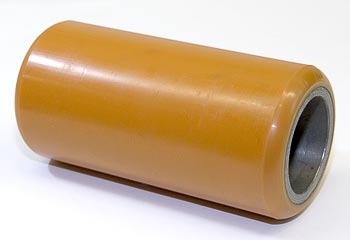
Polyurethane Wheel (95D) for Electric Lift Trucks 3.25 Di
SYF9136HL
Couldn't load pickup availability
- Expert support & fitment help
- 30-day returns
- Fast Shipping
Compatibility
|
Make |
- |
|---|---|
|
Model |
- |
Reference Diagrams
Visit our diagram page for part references to popular models
Product Description
The SYF9136HL is a high-performance polyurethane load wheel designed for electric lift trucks featuring a. Built with 95 Shore D polyurethane bonded to an industrial polymer core, this wheel delivers exceptional durability and load-carrying capacity for tandem axle configurations. The precision ball bearing ensures precise fitment and smooth operation on select lift truck models from major manufacturers.
Specifications
Dimensions & Specifications
| Shore Hardness | 95 Shore D |
| Axle Configuration | Tandem axle |
Material
| Tread Material | High-performance polyurethane elastomer |
| Core Material | Industrial polymer |
| Bonding Method | Chemical and mechanical bonding |
Part Numbers
| Manufacturer Part Number | SYF9136HL |
| Cross-Reference Part Numbers | Equivalent to TVH F9136HL, matches Helmar WH-736-95D |
| Replaces | Supersedes legacy poly wheel SYF9136 |
Frequently Asked Questions
Q: What are the specifications of the SYF9136HL wheel?
A: The SYF9136HL features a 95 Shore D polyurethane tread.
Q: What cross-reference part numbers match the SYF9136HL?
A: The SYF9136HL is equivalent to TVH F9136HL and matches Helmar WH-736-95D specifications. It also supersedes the legacy poly wheel SYF9136, making it a direct replacement for systems using the older part number.
Q: Which manufacturers produce compatible lift trucks?
A: The SYF9136HL is designed for tandem axle configurations and is compatible with electric lift trucks from Crown, Toyota, Raymond, Yale, Hyster, Jungheinrich, Linde, Clark, and other major manufacturers.
Q: What does 95 Shore D hardness mean?
A: 95 Shore D polyurethane offers high hardness and load capacity compared to softer compounds. This hardness rating provides superior resistance to abrasion and deformation during intensive material handling cycles, making it ideal for heavy-duty warehouse and logistics operations.
Q: How do chemical and mechanical bonding improve durability?
A: Chemical bonding fuses the polyurethane tread to the core at the molecular level, while mechanical bonding creates physical interlocking. Together, these methods prevent tread separation, spalling, and delamination, significantly extending wheel life in high-load applications.
Q: What bearing type does this wheel accommodate?
A:
Q: What maintenance is recommended for polyurethane load wheels?
A: Inspect the SYF9136HL regularly for wear, cracking, or spalling. Clean the tread and bearing surfaces to remove debris. Verify bearing tension and ensure the wheel rotates smoothly. Store wheels in a cool, dry location away from direct sunlight and extreme temperatures to prevent material degradation.

