

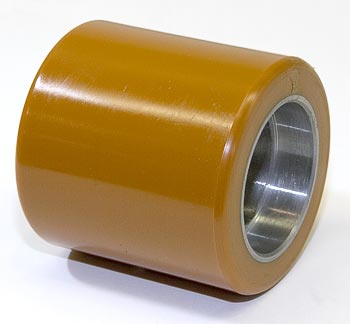
Polyurethane Wheel and Versatile - Fits Crown, Toyota
F9133
Guaranteed Fit. Check fit with us before you buy. If we confirm it fits your machine and it doesn’t, we’ll exchange or refund it: no restocking fee, return shipping on us. How it works
Not sure it fits? Send us your make, model and serial number and we’ll check it before you buy.
Couldn't load pickup availability
- Expert support & fitment help
- 30-day returns
- Fast Shipping
Compatibility
|
Make |
|
|---|---|
|
Model |
- |
Visit our diagram page for part references to popular models
Product Description
Polyurethane Load Wheel designed for electric pallet jacks and lift trucks. This durable polyurethane wheel delivers superior load capacity, abrasion resistance, and longevity in demanding warehouse and dock environments. Polyurethane construction offers excellent non-marking characteristics, resistance to oils and chemicals, and consistent performance across temperature ranges. Ideal for indoor use in distribution centers, loading docks, and general material handling applications.
Specifications
Material & Construction
| Material | Polyurethane |
Part Numbers & Compatibility
| Make | Crown, Toyota, Raymond, Yale, Hyster |
Frequently Asked Questions
Q: Which electric lift truck brands is the F9133 compatible with?
A: The F9133 is compatible with Crown, Toyota, Raymond, Yale, and Hyster electric lift trucks.
Q: What are the key advantages of polyurethane wheels for electric lift trucks?
A: Polyurethane wheels offer abrasion resistance and durability compared to rubber alternatives. They are non-marking, resistant to oils and chemicals, provide smooth and quiet operation, and perform consistently across temperature ranges in industrial settings.
Q: Is the F9133 suitable for wet or cold storage environments?
A: Standard polyurethane wheels like the F9133 perform well in normal warehouse conditions. For specialized wet floor or cold storage applications, verify the specific compound hardness and low-temperature rating to ensure adequate traction and material flexibility.
Q: How should I maintain the F9133 polyurethane wheel?
A: Inspect the tread surface regularly for cuts, chunks, or uneven wear. Clean debris and residue from the tread as needed. Polyurethane wheels do not require greasing. Replace the wheel when significant tread wear or uneven wear develops.
Q: When should the F9133 replacement wheel be replaced?
A: Replace the F9133 when the tread shows cuts, chunks, significant wear, or uneven wear. Service life depends on daily usage, floor surface, and maintenance practices.