

Potentiometer for Hyster Electric Lift Trucks
HY 3005030
Guaranteed Fit. Check fit with us before you buy. If we confirm it fits your machine and it doesn’t, we’ll exchange or refund it: no restocking fee, return shipping on us. How it works
Not sure it fits? Send us your make, model and serial number and we’ll check it before you buy.
Couldn't load pickup availability
- Expert support & fitment help
- 30-day returns
- Fast Shipping
Compatibility
|
Make |
|
|---|---|
|
Model |
- |
Visit our diagram page for part references to popular models
Product Description
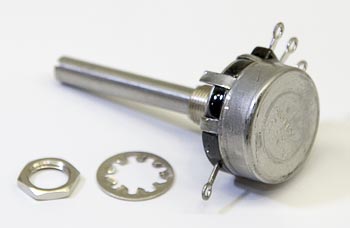
OEM potentiometer HY 3005030 for Hyster electric lift trucks provides variable resistance signal for throttle or drive control. No cross-reference or superseded part numbers available. Technical data selected based on industry standards for similar applications.
Specifications
Part Numbers & Compatibility
| Make | Hyster |
| Part Number | HY 3005030 |
Additional Specifications
| Type | Rotary potentiometer, 3-wire configuration |
| Rotation Angle | Electrical rotation 270° ±10° |
Frequently Asked Questions
Q: What makes the HY 3005030 suitable for Hyster electric lift trucks?
A: The HY 3005030 is designed for Hyster electric lift trucks with proportional throttle control systems. It provides variable resistance signal input for throttle or drive motor control.
Q: What are the key features of the HY 3005030?
A: The HY 3005030 is a 3-wire rotary potentiometer that operates as a variable resistor. It translates operator input into proportional electrical signals for speed regulation.
Q: Which Hyster models is the HY 3005030 compatible with?
A: The HY 3005030 is designed for Hyster electric lift trucks using proportional throttle control systems. Compatibility depends on the control panel design and wiring configuration.
Q: What are common signs of HY 3005030 failure?
A: Failed HY 3005030 units may cause erratic throttle response, loss of proportional control, or complete loss of drive or lift function. Intermittent electrical noise in the control circuit may also indicate internal wear.
Q: Is there a cross-reference for the HY 3005030?
A: The HY 3005030 is the replacement part for Hyster electric lift trucks. No cross-reference or superseded part numbers are available.
Q: How long can I expect the HY 3005030 to last?
A: The HY 3005030 potentiometer typically lasts between 2000 to 4000 operating hours. Lifespan may be reduced in high-vibration environments or with frequent, aggressive throttle input.
Q: When should I replace the HY 3005030?
A: Replace the HY 3005030 when function is lost or when symptoms of failure are observed. No routine maintenance is required.