

Brush Kit for Electric Lift Truck
PR 200064
Couldn't load pickup availability
- Expert support & fitment help
- 30-day returns
- Fast Shipping
Compatibility
|
Make |
|
|---|---|
|
Model |
- |
Visit our diagram page for part references to popular models
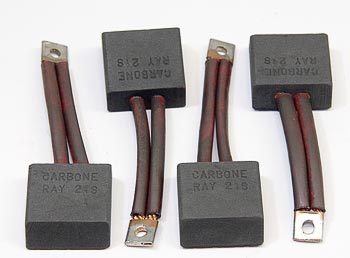
Product Description
BRUSH KIT
Specifications
Product Overview
| Product Type | Carbon Brush Kit |
Physical Specifications
| Material | Carbon-Based Composite |
| Electrical Function | Armature Current Conductor |
| Typical Service Life | 1500-3000 hours of operation |
| Wear Indicators | Reduced truck performance, uneven acceleration, sparking at motor vents, audible motor noise |
| Inspection Interval | Annual for wear depth assessment |
Compatibility
| Application | Traction Motor - Main Motor Assembly |
| Compatible Equipment | Electric pallet jacks and electric forklifts with compatible motor designs |
Frequently Asked Questions
Q: What is the PR 200064 brush kit used for?
A: The PR 200064 is a brush kit designed for replacement of worn carbon brushes in the main traction motor of electric lift trucks. Carbon brushes conduct electrical current to the armature and wear gradually with motor operation. This kit provides the replacement brushes needed to restore motor performance and current transfer efficiency.
Q: Which electric lift truck models use the PR 200064 brush kit?
A: The PR 200064 is an OEM replacement component for electric lift trucks equipped with specific main traction motor designs. Compatibility varies by manufacturer and motor generation. Confirm your equipment model, voltage system, and motor part number before ordering to ensure the correct brush kit for your truck.
Q: What materials are the PR 200064 brushes made from?
A: The PR 200064 brushes are carbon-based composite material engineered for optimal electrical conductivity and wear resistance. The carbon composition is selected to minimize commutator damage while providing consistent current transfer across a range of motor speeds and loads.
Q: How often should the PR 200064 brushes be replaced?
A: Brush replacement intervals depend on motor duty cycle and operator technique. Typical service life ranges from 1500 to 3000 hours of operation. Signs of wear include reduced truck performance, uneven acceleration, sparking visible through motor ventilation holes, or audible motor noise. Inspect brushes annually for wear depth.