

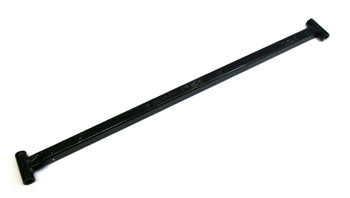
Push Rod for Rol-Lift Manual Pallet Jack
RL 7-10007-04
Couldn't load pickup availability
- Expert support & fitment help
- 30-day returns
- Fast Shipping
Compatibility
|
Make |
|
|---|---|
|
Model |
- |
Visit our diagram page for part references to popular models
Product Description
Push Rod for 48" Forks
This 48-inch push rod is a critical hydraulic lift component designed for manual pallet jacks. It transfers lifting force from the hydraulic cylinder directly to the fork carriage, enabling smooth and controlled vertical load movement. Constructed from durable steel stock, the RL 7-10007-04 withstands repetitive hydraulic pressure cycles and warehouse load conditions. Direct replacement for Rol-Lift manual pallet jack systems equipped with 48-inch forks.
Frequently Asked Questions
Q: What does the RL 7-10007-04 push rod do?
A: The RL 7-10007-04 is a 48 inch push rod designed for manual pallet jacks with 48 inch forks. This component transfers lifting force from the hydraulic cylinder to the fork carriage, enabling smooth vertical load movement.
Q: Which Rol-Lift pallet jack models use the RL 7-10007-04 push rod?
A: The RL 7-10007-04 is compatible with Rol-Lift manual pallet jacks equipped with 48 inch forks. Verify your equipment has 48 inch forks and your model series is compatible before ordering. Contact us with your serial number if you need confirmation.
Q: What is the length specification of the RL 7-10007-04?
A: The RL 7-10007-04 is manufactured to a 48 inch length. This dimension matches the fork width on compatible equipment. Always verify your equipment fork length before ordering to ensure correct fitment.
Q: What material and durability can I expect from the RL 7-10007-04 push rod?
A: The RL 7-10007-04 is constructed from steel rod stock designed to withstand repetitive hydraulic pressure and load cycles. Steel construction provides strength and resistance to bending under standard warehouse load conditions.
Q: How do I know if my RL 7-10007-04 push rod needs replacement?
A: Inspect the rod for visible bending, cracks, or corrosion. If lifting feels uneven, slow, or jerky, the rod may be bent. If the hydraulic cylinder extends but forks do not rise, check for rod damage or disconnection. Replace if damage is visible.
Q: What maintenance does the RL 7-10007-04 require?
A: Keep the push rod clean and inspect connection points periodically for looseness or corrosion. Wipe off hydraulic fluid or debris. Check that both ends are securely fastened to the hydraulic cylinder and fork carriage. Lubricate connection pins if applicable per your equipment manual.