

Roll Pin for Manual Pallet Jacks, 50133187
50133187
Couldn't load pickup availability
- Expert support & fitment help
- 30-day returns
- Fast Shipping
Compatibility
|
Make |
- |
|---|---|
|
Model |
- |
Visit our diagram page for part references to popular models
Product Description
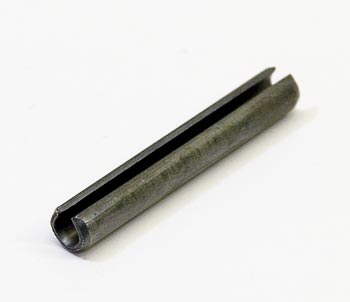
ROLL PIN
Frequently Asked Questions
Q: What is a roll pin and what function does it serve in manual pallet jacks?
A: A roll pin is a hollow cylindrical fastener used to secure pivot points, actuator linkages, and load arm assemblies on manual pallet jacks. It is pressed or driven into aligned holes to prevent components from shifting under load. Roll pin 50133187 is sized for standard manual pallet jack pivot joints.
Q: What manual pallet jack models use roll pin 50133187?
A: This roll pin is compatible with manual pallet trucks from Crown, Toyota, Raymond, Yale, Clark, CAT, and Mitsubishi. Verify the pin hole diameter and length match your equipment design. Check the pivot joint or linkage assembly on your jack to confirm the roll pin size and location.
Q: What material is roll pin 50133187 made from?
A: Roll pin 50133187 is typically manufactured from spring steel or stainless steel for corrosion resistance. The rolled construction creates a spring-tension fit that holds the pin firmly without secondary fasteners. Material grade impacts durability in wet or outdoor environments.
Q: How often should roll pin 50133187 be inspected or replaced?
A: Inspect roll pins during regular maintenance intervals for visible wear, deformation, or corrosion. Replace if the pin shows cracks, becomes loose allowing component movement, or corrodes significantly. In high-use or wet environments, expect replacement every 2 to 3 years. Loose roll pins cause slack in linkages and sloppy jack operation.
Q: What failure symptoms indicate a bad roll pin?
A: Failing roll pins produce noise during operation (clicking or rattling), allow excessive play in the load arms or actuator, cause uneven lifting, or permit the load arm to drop unexpectedly. Visually inspect the joint for the pin protruding from the hole or a gap that allows components to move independently.