

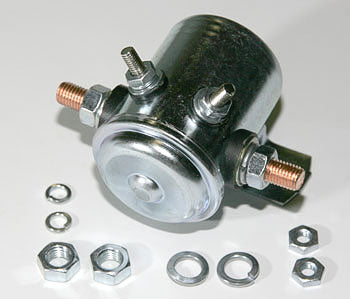
24 Volt Solenoid
CK919974
Guaranteed Fit. Check fit with us before you buy. If we confirm it fits your machine and it doesn’t, we’ll exchange or refund it: no restocking fee, return shipping on us. How it works
Not sure it fits? Send us your make, model and serial number and we’ll check it before you buy.
Couldn't load pickup availability
- Expert support & fitment help
- 30-day returns
- Fast Shipping
Compatibility
|
Make |
- |
|---|---|
|
Model |
- |
Visit our diagram page for part references to popular models
Product Description
SOLENOID (24 VOLT)
Specifications
Product Overview
| Type | Solenoid Valve Actuator |
Physical Specifications
| Voltage | 24 Volts DC |
| Coil Design | Continuous Duty Rated |
| Environmental Rating | Sealed for Industrial Warehouse Use |
| Compatibility | Crown, Toyota, Raymond, Jungheinrich, Linde Electric Forklifts |
Compatibility
| Application | Electric Lift Truck Valve Control (Lift, Tilt, Auxiliary Functions) |
Frequently Asked Questions
Q: What voltage does the CK919974 solenoid operate at?
A: CK919974 is a 24-volt solenoid designed for electric lift truck and material handling equipment. Verify your equipment power system before ordering to ensure 24V DC compatibility.
Q: Which electric lift truck models use the CK919974 solenoid?
A: CK919974 is compatible with electric lift trucks from manufacturers including Crown, Toyota, Raymond, Jungheinrich, and Linde. Confirm your model and serial number to verify fitment.
Q: What are the symptoms of a failing CK919974 solenoid?
A: Common failure indicators include: lift function does not respond to control input, intermittent lifting action, or clicking sounds from the solenoid without mechanical response. Testing with a multimeter can confirm solenoid coil continuity.
Q: How long does a CK919974 solenoid typically last in warehouse use?
A: A 24V solenoid under normal operating conditions typically performs for 3-7 years depending on cycling frequency, duty cycle intensity, and environmental conditions like moisture exposure.