

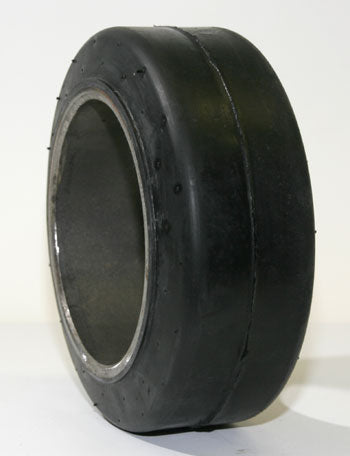
10 in. x 4 in. Replacement Drive Tire for Electric Lift Trucks
SU 10 X 4 X 65-SF-R
Couldn't load pickup availability
- Expert support & fitment help
- 30-day returns
- Fast Shipping
Compatibility
|
Make |
- |
|---|---|
|
Model |
- |
Visit our diagram page for part references to popular models
Product Description
Replacement drive tire for electric lift trucks, constructed from solid rubber with a smooth flat tread, designed for press-on installation to a 6.5 inch hub. Compatible with electric pallet trucks and lift trucks requiring a 10 inch diameter x 4 inch width drive tire.
Specifications: 10.000 inch diameter x 4.000 inch width (10.000" x 4.000" | 10 x 4.0 wheel | 10 x 4 | 254.00mm x 101.60mm)
Specifications
Material
| Tire Material | Solid industrial rubber compound |
| Tire Construction | Press-on tire bonded to steel band |
| Steel Band Specification | Industrial grade steel, integrated for press fit mounting |
Wheel Specifications
| Outside Diameter (in) | 10.000 |
| Width (in) | 4.000 |
| Outside Diameter (mm) | 254.00 |
| Width (mm) | 101.60 |
| Drive Tire Profile | Smooth Flat |
| Material | Rubber |
Frequently Asked Questions
Q: Is SU 10 X 4 X 65-SF-R solid rubber compatible with pallet jacks and electric lift trucks?
A: Yes. SU 10 X 4 X 65-SF-R is a solid rubber press-on drive tire designed for both electric pallet trucks and electric lift trucks with 10 inch drive wheel diameter and 6.5 inch hub bores. The smooth flat tread and solid construction provide durability for typical warehouse operations. Confirm your truck model accepts a 4 inch width tire before ordering. Some narrow-frame models require 3.5 or 3.75 inch width instead.
Q: What is the load capacity of SU 10 X 4 X 65-SF-R per wheel at standard load center?
A: SU 10 X 4 X 65-SF-R carries a nominal 3500 lb capacity per drive wheel at 24 inch load center. This is the standard rating for most electric pallet jacks and lift trucks using this tire size. Check your truck nameplate for exact capacity because some models may be rated lower. Do not exceed the truck capacity by stacking multiple loads. Overloading solid rubber tires causes internal cracking and rim separation within 6 to 12 months of heavy use.
Q: How do you inspect SU 10 X 4 X 65-SF-R for wear and damage?
A: Inspect every 30 days. Look at the smooth flat tread surface for flat spots, wear lines, or cracks. Check the sidewall and shoulder area for splits or visible peeling. Perform a hub tightness test: lift the truck and try to move the tire sideways on the hub with your hand. Any movement means the tire is slipping and must be repressed or replaced. Feel the tread: solid rubber does not compress much but should have a slight give. If the tread is hard as concrete, the rubber has deteriorated from age or heat and replacement is needed. Typical life is 4 to 7 years.
Q: What are the correct steps for pressing SU 10 X 4 X 65-SF-R onto a 6.5 inch hub?
A: Use a hydraulic press rated for 15 to 20 tons with bearing support blocks sized for 6.5 inch hubs. Clean the hub bore and tire bore thoroughly with a wire brush to remove rust and debris. Apply a light coat of silicone lubricant to the hub bore for easier installation. Mount the tire vertically in the press and center the hub. Press at 2 to 3 inches per minute until the tire seats fully on the hub. Do not apply more than 25 tons of force. Solid rubber tires press easier than polyurethane so less force is needed. After pressing, allow 1 to 2 hours for the assembly to cool and stabilize before mounting on the truck.
Q: Will SU 10 X 4 X 65-SF-R leave marks on polished concrete or epoxy floors?
A: Solid rubber tires are not non-marking. SU 10 X 4 X 65-SF-R may leave dark scuff marks or discoloration on polished concrete or sealed epoxy floors, especially during sharp turns or on wet surfaces. Floor marking severity depends on floor finish, humidity, tire cleanliness, and driving technique. If your facility requires non-marking performance, upgrade to a polyurethane tire with non-marking certification. If you must use solid rubber, maintain a regular floor cleaning schedule and keep tires clean.
Q: What maintenance schedule and storage practices keep SU 10 X 4 X 65-SF-R tires in service longer?
A: Clean tires biweekly with mild soap and water to remove oils and debris that accelerate cracking. Rotate drive and load wheels every 6 months to equalize wear. Check hub tightness monthly and repress any tire that moves on the hub. Inspect for cracks and hardness every 4 to 6 weeks. Store unused replacement tires indoors at room temperature away from UV light and heat, which harden rubber over time. Keep tires away from oils, gasoline, and direct sunlight. If a tire develops cracks or begins delaminating from the rim, remove it immediately to prevent sudden failure and loss of control.