

10 in. x 5 in. Replacement Drive Tire for Electric Lift Trucks
SU 10 X 5 X 65-SF-R
Couldn't load pickup availability
- Expert support & fitment help
- 30-day returns
- Fast Shipping
Compatibility
|
Make |
- |
|---|---|
|
Model |
- |
Visit our diagram page for part references to popular models
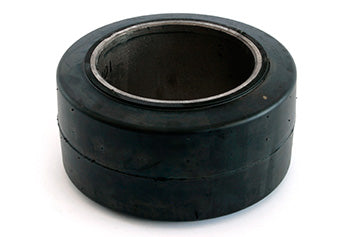
Product Description
Replacement drive tire for electric lift trucks, featuring a smoothflat rubber tread, 10.5 inch diameter, 5.0 inch width, and 6.5 inch hub bore, designed for press-on mounting and indoor applications.
Specifications: 10.000 inch diameter x 5.000 inch width (10.000" x 5.000" | 10 x 5.00 wheel | 10 x 5 | 254.00mm x 127.00mm)
Specifications
Material
| Tread Material | Industrial solid rubber compound |
| Core Material | Steel |
Part Numbers
| Manufacturer Part Number | SU 10.5 X 5 X 6.5-SF-R |
| OEM Part Number | SU 10 X 5 X 65-SF-R |
Wheel Specifications
| Outside Diameter (in) | 10.000 |
| Width (in) | 5.000 |
| Outside Diameter (mm) | 254.00 |
| Width (mm) | 127.00 |
| Drive Tire Profile | Smooth Flat |
| Material | Rubber |
Frequently Asked Questions
Q: Why would I choose an industrial rubber tire over polyurethane?
A: Industrial solid rubber is the best choice for outdoor, extreme temperature, or high-abrasion environments. It resists UV degradation and cold hardening far better than polyurethane, making it suitable for dock work, outdoor storage yards, and unheated facilities. Tradeoff: rubber offers less cushioning and can feel harsher on the operator, and it is heavier.
Q: Is the SU 10 X 5 X 65-SF-R a direct replacement for polyurethane drive tires on my truck?
A: Yes, dimensionally. The 10 x 5 x 6.5 form factor fits the same hub. However, the rubber compound is denser, making the tire slightly heavier, which may affect truck handling and battery consumption on electric lifts. Test with one tire first if switching compounds. Do not mix rubber and polyurethane tires on the same truck.
Q: How long will an industrial rubber drive tire last in outdoor dock service?
A: Typically 18-30 months in moderate outdoor use (covered dock, intermittent exposure). Full outdoor exposure (loaded truck sitting in sun and rain) reduces life to 12-18 months due to UV and thermal cycling. Inspect monthly for cracking and hardening. Rubber tires harden slowly; once hard, they lose traction and must be replaced, not re-dressed.
Q: What is the procedure to diagnose rubber tire failure?
A: Inspect for: radial cracking (cracks running around the tire circumference), flat spots, or chunks separating from the core. Functional test: load the truck and listen for squealing or grinding; feel for steering pull or loss of traction on smooth floors. If steering becomes unpredictable or the tire makes noise, stop operation and replace. Rubber tires do not flex when hardened, making them unsafe.
Q: Can a rubber drive tire be used at sub-zero temperatures?
A: Limit use to no lower than 0 degrees Fahrenheit. Below that, rubber becomes brittle and loses grip; the tire may crack under load or steering failure may occur. Below -20 degrees, do not operate. If cold-climate operation is required, consult manufacturer for specialized low-temperature rubber compounds.
Q: What maintenance is needed to extend rubber tire life?
A: Monthly: wash off salt and chemicals (accelerate cracking if left on). Inspect for UV-induced surface cracking. Store covered tires indoors when not in use. Do not park loaded trucks in direct sun for extended periods. Check hub bearings for wear (loose bearings cause tire wobble and accelerated failure). Rotate tires if possible to even wear.