

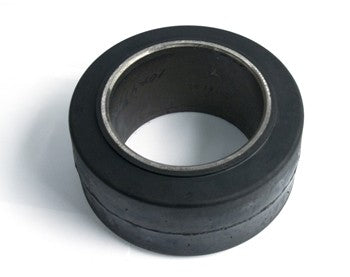
10 in. x 4.7.5 in. Rubber Press-On Tire - Electric Lift Trucks
SU 10X475X65-SF-R
Couldn't load pickup availability
- Expert support & fitment help
- 30-day returns
- Fast Shipping
Compatibility
|
Make |
- |
|---|---|
|
Model |
- |
Visit our diagram page for part references to popular models
Product Description
Rubber press-on tire with nominal dimensions 10 x 4.75 x 6.5 inches, smooth tread profile, for use on electric lift trucks. Constructed from industrial-grade bonded rubber and steel core for wear performance. Direct equivalent to Superior Tire r01000480651 and S100048065.
Specifications: 10.000 inch diameter x 4.750 inch width (10.000" x 4.750" | 10 x 4.75 wheel | 10 x 4-3/4 | 254.00mm x 120.65mm)
Specifications
Material
| Construction Method | Injection molded with rubber-to-steel bonding system |
Part Numbers
| Comparable SKU | r01000480651 (Superior Tire) |
Performance
| Tread Design | SF smooth finish profile |
Wheel Specifications
| Outside Diameter (in) | 10.000 |
| Width (in) | 4.750 |
| Outside Diameter (mm) | 254.00 |
| Width (mm) | 120.65 |
| Drive Tire Profile | Smooth Flat |
| Material | Rubber |
Frequently Asked Questions
Q: Is the SU 10X475X65-SF-R equivalent to Superior Tire r01000480651?
A: Yes. The SU 10X475X65-SF-R is a direct equivalent to Superior Tire model r01000480651 and the older part number S100048065. Both are 10.000 inch diameter x 4.750 inch width rubber press-on tires with smooth flat (SF) tread profile. Both use the same 6.5 inch rim width and bonded rubber-to-steel core construction. You can order SU 10X475X65-SF-R as a drop-in replacement with no modifications needed. Verify the lift truck manual lists a 10x4.75x6.5 size to confirm fitment before purchasing.
Q: What does injection molded with rubber-to-steel bonding mean for tire durability?
A: Injection molding applies heated rubber under pressure directly to a steel core ring, creating a permanent chemical bond that resists separation even after years of use. This construction method is more durable than glue-bonded or vulcanized methods because the rubber cannot delaminate or peel away from the core. The result is a tire that lasts 6 to 8 years under normal warehouse duty. Confirm the SF-R tire you purchase uses this bonding method; older or cheaper rubber tires may use adhesive bonding, which can fail and separate the rubber from the rim after 3 to 4 years.
Q: Can I repair a flat spot or minor damage to the SF-R tire, or must I replace it?
A: Rubber press-on tires cannot be repaired like pneumatic tires. If the rubber is gouged, cut, or cracked more than 0.25 inches deep, the tire must be replaced. Flat spots from sitting stationary for weeks are permanent and indicate the tire has lost resilience; replacement is needed. Surface dirt or discoloration can be cleaned but does not restore worn tread. Minor white streaks from salt or oil are cosmetic. Do not attempt to sand, grind, or patch the tire; doing so weakens the rubber-to-steel bond and risks separation. Replacement is the only safe option.
Q: How do I install the SU 10X475X65-SF-R tire and what tools do I need?
A: Remove the lift truck from service and park it on a level floor with mast fully retracted. Never work under a raised load. Using a 20-ton hydraulic shop press, mount the wheel assembly between the press plates with the tire facing the press platen. Remove the old tire by pressing it off the rim at steady pressure (8 to 12 tons force). Do not exceed 15 tons or you risk cracking the rim. Clean the rim bore of any dirt or debris with a wire brush. Install the new SF-R tire by centering it on the rim bore and pressing it on with even, steady pressure until the rim flange fully seats. Allow 24 hours cure time before operating.
Q: What are the load and speed limits for the SF-R tire on an electric lift truck?
A: Each 10x4.75x6.5 rubber SF-R tire supports 700 to 850 pounds on a smooth warehouse floor, depending on rim condition and floor hardness. A four-tire set on a pallet jack distributes load across four contact points; check your lift truck nameplate for total capacity. Do not exceed 5 miles per hour on outdoor or rough surfaces; rubber tires can overheat and degrade if driven at sustained high speeds on poor floors. Never intentionally drag or pivot hard on a single wheel; this generates excessive heat and accelerates tread wear. Operate at speeds below 4 MPH on outdoor gravel or uneven concrete.