

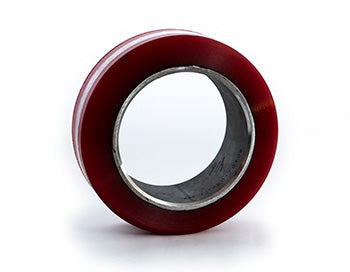
Drive Tire for Electric Lift Truck
SU 13 X 4.5 X 8
Couldn't load pickup availability
- Expert support & fitment help
- 30-day returns
- Fast Shipping
Compatibility
|
Make |
- |
|---|---|
|
Model |
- |
Visit our diagram page for part references to popular models
Product Description
Polyurethane press-on drive tire SU 13 X 4.5 X 8 for electric lift trucks. Tapered side wall, 13-inch outer diameter, 4.5-inch width, 8-inch inner diameter. Designed for industrial warehouse environments, dockboards, and freezer applications where non-marking and shock absorption are critical. Made with commercial-grade poly compound for extended service life.
Specifications: 13.000 inch diameter x 4.500 inch width (13.000" x 4.500" | 13 x 4.5 wheel | 330.20mm x 114.30mm)
Specifications
Material
| Tire Material | Polyurethane compound |
Part Numbers
| Manufacturer Part Number | SU 13 X 4.5 X 8 |
Wheel Specifications
| Outside Diameter (in) | 13.000 |
| Width (in) | 4.500 |
| Outside Diameter (mm) | 330.20 |
| Width (mm) | 114.30 |
Frequently Asked Questions
Q: What is the difference between this standard TSW tire and the FT-P flat tread variant?
A: The SU 13 X 4.5 X 8 uses a tapered side wall (TSW) profile where the sidewall angles inward. The SU 13 X 4.5 X 8-FT-P variant uses flat tread (FT) profile where the width stays constant from tread to sidewall. TSW tires work better on flat, standard rims and cost less. Flat tread tires are necessary for dished or curved rims and provide better sidewall support on those designs. Both are 13 x 4.5 x 8 in size. Choose TSW for general warehouse use; choose FT-P only if your rims are specifically dished or if the OEM specifies flat tread.
Q: Is this tire suitable for freezer applications and low-temperature operation?
A: Yes, polyurethane tires are suitable for freezer environments. Polyurethane maintains flexibility and grip at sub-zero temperatures whereas rubber becomes brittle. The commercial-grade poly compound specified for this tire is engineered for freezer warehouses and frozen food storage. However, verify that your forklift brakes, hydraulics, and battery are rated for the cold temperature. Condensation can form on the tire between freezer and ambient areas; wipe the tires dry before entering normal temperature zones to prevent slipping. Tire life may be extended in freezer use since rubber-related degradation is minimized.
Q: What hub diameter is required and how do I confirm fitment?
A: This tire requires an 8 inch (203mm) hub bore diameter. The tire itself is 13 inches outer diameter and 4.5 inches wide. Always verify your forklift hub size before ordering because 8 inch hubs do not fit 7.5 inch, 8.5 inch, or 9 inch specifications. Check your truck manual or measure the hub if documentation is not available. Incorrect hub sizing causes the tire to slip or fail to seat during installation. Confirming fitment takes 5 minutes and prevents costly returns.
Q: How do I measure tire wear and determine remaining life?
A: Inspect the tire visually each week during operation. Run your finger across the tread to feel for flat spots or unevenness. Measure tread depth using a depth gauge or penny test: insert a penny into the tread upside down; if you can see the top of Lincolns head, tread is less than 1/8 inch and replacement is due. Check sidewalls for cracks, gouges, or separation from the hub. If any damage is visible, replace the tire immediately. Do not estimate remaining life; measure it. A tire that appears acceptable may have internal damage that causes sudden failure.
Q: Does this tire leave marks on clean floors and what is the non-marking performance?
A: The product description states this tire is designed for clean floor applications and warehouse environments where non-marking is valued. However, the specification does not explicitly confirm non-marking certification. Standard polyurethane tires can leave faint marks depending on surface interaction and tire age. If non-marking is required (pharmaceutical, food processing, showroom), verify with the supplier before purchasing. Newer tires mark less than aged ones. Test on a small area before committing to full fleet replacement if non-marking is critical.
Q: What is the recommended replacement interval and maintenance schedule?
A: Inspect tires monthly for visible damage. Replace based on condition, not calendar schedule. Average service life is 2-5 years in typical warehouse environments with 40-50 operating hours per week. Heavy-use facilities (80+ hours per week) may need replacement every 18-24 months. Freezer operations may extend life since temperature stability reduces compound degradation. Record installation date and track usage hours. Clean tires monthly with mild soap and water to remove debris. Avoid harsh solvents that degrade polyurethane. Monthly inspection takes 10 minutes and catches failures before they cause accidents.