

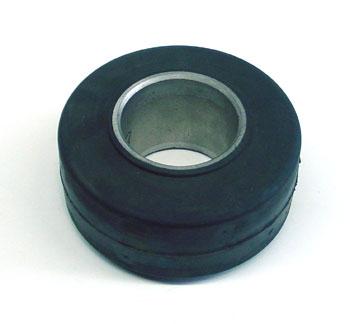
8.5 in. x 4 in. Rubber Press-On Tire for Size
SU 8.5X4X4-SF-R
Couldn't load pickup availability
- Expert support & fitment help
- 30-day returns
- Fast Shipping
Compatibility
|
Make |
- |
|---|---|
|
Model |
- |
Visit our diagram page for part references to popular models
Product Description
Rubber Press-On
Specifications: 8.500 inch diameter x 4.000 inch width (8.500" x 4.000" | 8.5 x 4 wheel | 8-1/2 x 4 | 215.90mm x 101.60mm)
Specifications
Wheel Specifications
| Outside Diameter (in) | 8.500 |
| Width (in) | 4.000 |
| Outside Diameter (mm) | 215.90 |
| Width (mm) | 101.60 |
| Drive Tire Profile | Smooth Flat |
| Material | Rubber |
Frequently Asked Questions
Q: What is the difference between the SF-R press-on and the SF-R-A assembly?
A: The SU 8.5x4x4-SF-R is a rubber press-on tire that slides onto your existing hub. The SF-R-A is a complete assembly with integrated hub and bearing. Choose the SF-R press-on if your hub is still good and you only need to replace the tire. Choose the SF-R-A assembly when your hub is damaged or worn and you need a complete wheel replacement.
Q: What hub bore sizes does the SF-R rubber press-on fit?
A: The SU 8.5x4x4-SF-R fits standard steel or cast iron hubs with bore sizes between 0.875 inch and 1.125 inch depending on truck model. Hubs made for this wheel have a smooth bore with no internal threads. Always measure your hub bore with calipers before ordering. If the bore is too small, the press-on will not slide on. If the bore is too large, the wheel will slip under load. Consult your truck manual or parts diagram to confirm exact bore size.
Q: Why does rubber provide better traction than polyurethane on warehouse floors?
A: Rubber is softer and has more surface grip than polyurethane. This means better traction on smooth polished concrete and wet floors. Rubber can adhere to the driving motor surface more evenly, reducing slip risk during acceleration and turning. Polyurethane is harder and slides more easily on smooth surfaces. Warehouses with smooth or wet floors benefit from rubber. Outdoor or rough surface applications should use polyurethane because it resists cutting and abrasion.
Q: How do I press a rubber SF-R wheel onto my hub if I do not have a hydraulic press?
A: A bearing puller or two-jaw puller can be used to gradually press the wheel onto the hub. Place the wheel on the hub and position the puller so its arms grip the outer diameter of the wheel. Tighten the center screw slowly and evenly. Do not rush or use hammering motions because this can crack the rubber. The wheel should slide onto the hub smoothly with steady pressure. Once the wheel seats fully on the hub, remove the puller. Some shops use a vise with wood blocks on each side of the wheel to distribute pressure evenly.
Q: What does it mean if a rubber press-on wheel is slipping on the hub?
A: Slipping means the press-on fit has failed and the wheel is no longer gripped tightly to the hub. This happens when the hub bore has become enlarged from wear, corrosion, or damage. Check the hub bore for scoring, rust, or pitting. If the bore is damaged, the press-on cannot hold regardless of installation method. You must either replace the hub or use a larger bore press-on wheel if your truck design allows. Continuing to operate a slipping wheel can cause truck failure and is unsafe.
Q: How long does a rubber press-on wheel typically last before replacement?
A: Rubber press-on wheels last 2 to 4 years on average depending on truck usage, floor conditions, and load. Heavy daily use in warehouses can wear rubber in 18 to 24 months. Light duty applications may see 5 to 6 years of service. Wet or outdoor conditions accelerate wear and tear. Inspect the tire surface quarterly for flat spots, cracks, or chunks. Rotate trucks among different operational paths to avoid wearing one wheel more than others. Replace the wheel immediately if cracks appear because rubber deterioration accelerates once cracking starts.