

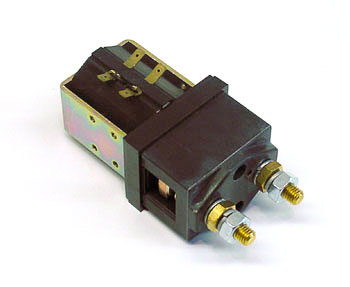
Contactor for Electric Lift Truck - Fits Albright, Curtis
SW200-2
Couldn't load pickup availability
- Expert support & fitment help
- 30-day returns
- Fast Shipping
Compatibility
|
Make |
|
|---|---|
|
Model |
- |
Visit our diagram page for part references to popular models
Product Description
CONTACTOR (24 VOLT)
Specifications
Part Numbers & Compatibility
| Make | Albright, Curtis, Hangcha, Heli, TCM, Tailift, Hyster, Still, Fenwick |
| Part Number | SW200-2 |
| Application | Electric Lift Trucks, Electric Pallet Jacks |
| Compatible Equipment | 24V electric lift trucks from Crown, Toyota, Raymond, Yale, Hyster, and similar manufacturers |
Electrical Specifications
| Voltage Rating | 24 Volts DC |
Additional Specifications
| Product Type | Electrical Contactor |
| Function | High-current circuit control relay for motor and pump circuits |
Frequently Asked Questions
Q: What brands of equipment use the SW200-2 contactor?
A: The SW200-2 is compatible with 24-volt electric lift trucks from Albright, Curtis, Hangcha, Heli, TCM, Tailift, Hyster, Still, and Fenwick. Confirm your equipment operates on 24 volts and verify cross-compatibility with your equipment model before ordering.
Q: What is the purpose of a contactor in lift truck electrical systems?
A: A contactor acts as a relay, controlling high-current circuits for the lift truck motor, pump, and auxiliary systems. When energized, it switches power on and off in response to operator controls. Contactors are critical safety and functionality components.
Q: How can I determine if the SW200-2 is the correct replacement part for my equipment?
A: To ensure compatibility, check your equipment's part number or consult the manufacturer's documentation. The SW200-2 is designed for 24-volt electric lift trucks and pallet jacks, so confirm your equipment operates on a 24-volt system.
Q: What materials is the SW200-2 contactor made from?
A: The SW200-2 is constructed with durable materials designed for long-term use in industrial environments. It is built to withstand the demands of frequent operation and harsh conditions.
Q: Is the SW200-2 contactor suitable for use in high-temperature environments?
A: The SW200-2 is engineered for reliable performance in a variety of operating conditions, including high-temperature environments. It is designed to maintain functionality and safety under demanding industrial settings.