

24V 15AMP On Board Charger by - Pallet Jacks
SY37583
Battery chargers are model-, voltage-, battery chemistry-, connector-, and sometimes serial-number specific. Using an incompatible charger may result in battery damage, equipment damage, or safety hazards.
Before ordering, confirm:
- Truck make and model
- Serial number
- Battery voltage
- Battery type (lead-acid vs lithium)
- Connector style
If you’re unsure, contact us before purchasing with your equipment details.
Non-Refundable Item: Battery chargers are non-refundable. Please verify compatibility before purchasing.
Couldn't load pickup availability
- Expert support & fitment help
- 30-day returns
- Fast Shipping
Compatibility
|
Make |
- |
|---|---|
|
Model |
- |
Visit our diagram page for part references to popular models
Product Description
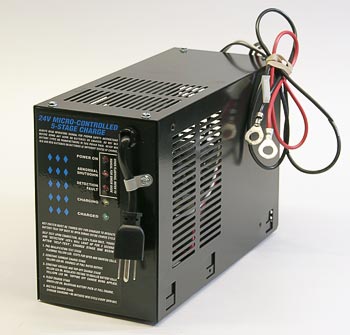
Charger, On Board (24V 15Amp)
Specifications
Part Numbers & Compatibility
| Charging Application | Electric pallet jacks, walkie stackers, electric forklifts |
Electrical Specifications
| Voltage | 24 V |
| Amperage | 18 A |
| Charger Type | Onboard (Integrated) |
| Typical Charge Time | 8-12 hours (80-125 Ah battery) |
| Recommended Battery Capacity | 80-125 Amp-hours |
| Battery Configuration | Two 12V batteries in series |
Performance Specifications
| Environmental Operating Range | Climate-controlled warehouse environments |
Additional Specifications
| Typical Service Life | 5-10 years |
Frequently Asked Questions
Q: What does a 24V 18Amp charger output specification mean?
A: The 24-volt rating indicates the charger is designed for two 12-volt batteries connected in series. The 18-amp specification refers to the maximum charging current the charger delivers to the battery pack. This combination provides standard recharge rates for electric lift trucks.
Q: Can the SY37583 be used on equipment with a different battery capacity?
A: The SY37583 is designed for specific battery amp-hour capacities. Using an incorrectly sized charger on batteries outside the recommended range results in undercharging (insufficient runtime) or overcharging (reduced battery lifespan and safety hazards). Verify your battery amp-hour rating and voltage configuration match the charger specifications.
Q: What are the electrical specifications of the SY37583?
A: The SY37583 operates at 24 volts and delivers up to 18 amps of charging current. It is designed for use with battery packs that match these electrical requirements.
Q: What are common failure symptoms of the SY37583 charger?
A: Failing SY37583 chargers exhibit slow or incomplete charging (batteries do not reach full state of charge), failure to initiate charging (no power indicator lights), or automatic shutdown during the charge cycle. These symptoms typically indicate internal transformer failure, rectifier defects, or control circuit malfunction. Non-responsive chargers require replacement to restore equipment operability.
Q: What is the typical lifespan of an onboard charger like the SY37583?
A: Onboard chargers typically last 5 to 10 years with proper maintenance and consistent environmental conditions. Lifespan is reduced by exposure to moisture, extreme temperatures, and power surges. Chargers used in climate-controlled environments last longer than those exposed to outdoor conditions or temperature fluctuations.
Q: How do I know if the SY37583 is the right replacement charger for my equipment?
A: Verify your equipment make and model against the compatible list: models . Ensure your battery voltage and charging current requirements match the SY37583 specifications of 24 volts and 18 amps.