

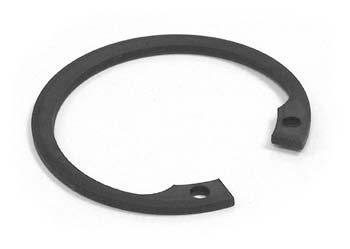
Retaining Ring
SY38609
Guaranteed Fit. Check fit with us before you buy. If we confirm it fits your machine and it doesn’t, we’ll exchange or refund it: no restocking fee, return shipping on us. How it works
Not sure it fits? Send us your make, model and serial number and we’ll check it before you buy.
Couldn't load pickup availability
- Expert support & fitment help
- 30-day returns
- Fast Shipping
Compatibility
|
Make |
- |
|---|---|
|
Model |
- |
Visit our diagram page for part references to popular models
Product Description
RETAINING RING
Specifications
Product Overview
| Product Type | Retaining Ring |
Physical Specifications
| Material Composition | Spring Steel or Carbon Steel |
| Heat Treatment | Hardened for elasticity and holding strength |
| Primary Function | Component retention and separation prevention |
Compatibility
| Application | Manual pallet jack lift mechanism assemblies |
| Replacement Condition | When deformed, loses tension, or fails to hold components securely |
Frequently Asked Questions
Q: What is the SY38609 retaining ring used for?
A: The SY38609 is a retaining ring designed for manual pallet jack assemblies. It is used to secure components in place within the lift mechanism and prevent separation during operation and storage.
Q: What material is the SY38609 made from and what is its durability?
A: This retaining ring is typically manufactured from spring steel or carbon steel with proper heat treatment to provide elasticity and holding strength. Under normal warehouse and material handling use, the ring maintains its grip properties for the life of the equipment unless deformed during disassembly.
Q: Which manual pallet jack brands and models does the SY38609 fit?
A: This retaining ring is compatible with manual pallet jacks from Crown, Toyota, Raymond, Yale, and similar OEM manufacturers. Verify the exact position and diameter match your equipment before ordering. Cross-reference your equipment manual or original part number with our compatibility database.
Q: Do I need to replace the SY38609 retaining ring during routine maintenance?
A: Retaining rings do not require scheduled replacement under normal conditions. Replace only if the ring becomes deformed, loses tension, or fails to hold components securely. Deformation typically indicates the component it secures has shifted or failed.