

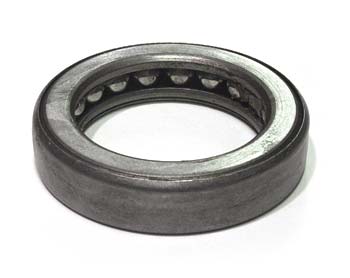
Tapered Roller Thrust Bearing for Crown Raymond Pallet Jack
T199
Guaranteed Fit. If it doesn’t fit equipment that matches the listing on this page, we’ll exchange or refund it: no restocking fee, return shipping on us. How it works
Not sure it fits? Check it with us before you buy. Once we confirm the fit in writing, it’s guaranteed for your machine.
Couldn't load pickup availability
- Expert support & fitment help
- 30-day returns
- Fast Shipping
Compatibility
|
Make |
|
|---|---|
|
Model |
|
Visit our diagram page for part references to popular models
Product Description
Timken T199 tapered roller thrust bearing with 2.010 inch bore diameter, 2.9375 inch outside diameter, and 0.625 inch width. Designed for undercarriage and wheel applications in material handling equipment models 8300, 8400, 8500, PE4000, and PE4500. Features 0.03 inch shaft fillet radius and USA manufacture.
Specifications
Part Numbers
| Manufacturer Part Number | T199 (Timken) |
| Alternate Part Number | T199-12 (RBC Bearings) |
| Assembly Configuration | T199-904A1 (Timken oscillating assembly) |
| Equipment Compatibility | Compatible with models 8300, 8400, 8500, PE4000, PE4500 |
Frequently Asked Questions
Q: What is the T199 bearing and what equipment does it fit?
A: The T199 is a Timken tapered roller thrust bearing designed for undercarriage and wheel applications in material handling equipment. It is compatible with models 8300, 8400, 8500, PE4000, and PE4500. This bearing supports radial and thrust loads in the drive and steering assemblies of pallet jacks and similar equipment.
Q: What are the key dimensions of the T199 bearing?
A: The T199 has a bore diameter of 2.010 inches, outside diameter of 2.9375 inches, and width of 0.625 inches. The shaft fillet radius is 0.03 inches. These dimensions are critical for proper fit in the undercarriage assembly.
Q: Are there cross-reference or alternate part numbers for the T199?
A: The T199 is manufactured by Timken. RBC Bearings offers an alternate part number T199-12. Timken also produces an oscillating assembly configuration T199-904A1 for specific applications. Always verify the correct configuration before ordering.
Q: Is the T199 manufactured in the USA?
A: Yes, the T199 is USA manufactured by Timken. This bearing meets North American quality and durability standards for material handling equipment.
Q: How long does a T199 bearing typically last in service?
A: The service life of a T199 bearing depends on load, operating conditions, and maintenance. Tapered roller bearings typically last 3 to 5 years under normal duty cycles in warehouse and manufacturing environments. Inspect for noise, heat, or play during routine maintenance to determine if replacement is needed.