

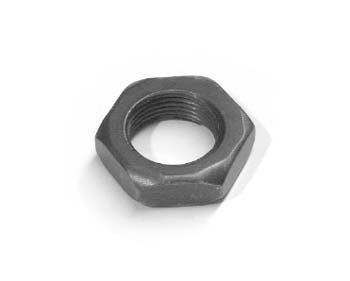
Lock Nut for Manual Pallet Jack
VL 215
Couldn't load pickup availability
- Expert support & fitment help
- 30-day returns
- Fast Shipping
Compatibility
|
Make |
- |
|---|---|
|
Model |
- |
Visit our diagram page for part references to popular models
Product Description
Lock Nut
Frequently Asked Questions
Q: What is the purpose of a VL 215 lock nut on a manual pallet jack?
A: VL 215 is a lock nut (also called a nylon-insert lock nut or stop nut) that prevents fasteners from loosening due to vibration, impact, or repeated loading cycles. On manual pallet jacks, lock nuts secure critical joints on steering assemblies, handle brackets, and wheel mounts where loosening is not acceptable.
Q: What material is VL 215 made from and does it need replacement over time?
A: VL 215 is steel with a nylon insert for lock function. The nylon insert deteriorates with repeated fastening cycles and temperature exposure. Replace VL 215 after removal if the nylon insert is compressed, worn, or no longer provides resistance when threading. Do not reuse compromised lock nuts.
Q: Which manual pallet jack models use VL 215 lock nuts?
A: VL 215 is a standard metric or SAE lock nut compatible with manual pallet jacks from Crown, Toyota, Raymond, Yale, Hyster, Clark, Mitsubishi, and other major OEMs. Verify the thread size and pitch match your equipment before ordering, as different models use different nut sizes.
Q: How can I tell if a VL 215 lock nut is worn out?
A: A worn VL 215 will turn freely without resistance when hand-threaded onto a bolt, or it will not hold tension when tightened. If threads are stripped, grooved, or the nylon insert is missing or flattened, the lock nut cannot function and must be replaced immediately.
Q: Can lock nuts be reused after removal from a manual pallet jack?
A: Lock nuts with intact nylon inserts may be reused if removed without damage. However, the nylon insert weakens with each tightening cycle. For critical applications on manual pallet jacks, purchasing new VL 215 lock nuts is recommended to ensure reliable vibration resistance and prevent equipment failure.
Q: What is the typical service life of VL 215 lock nuts?
A: VL 215 lock nuts typically provide 3 to 5 years of secure fastening under normal warehouse conditions. Lifespan depends on vibration exposure, temperature cycling, and frequency of maintenance operations. Inspect lock nuts during routine pallet jack servicing and replace if the nylon insert is compressed or missing.