

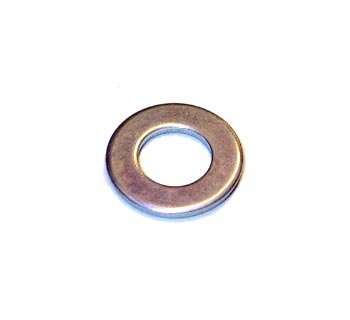
Washer for Electric Lift Truck
220017598
Couldn't load pickup availability
- Expert support & fitment help
- 30-day returns
- Fast Shipping
Compatibility
|
Make |
- |
|---|---|
|
Model |
- |
Visit our diagram page for part references to popular models
Product Description
WASHER
Specifications
Physical Specifications
| Part Type | Plain Flat Washer |
| Material | Hardened Steel |
| Corrosion Protection | Zinc-plated or hardened steel standard |
| Load Distribution | Prevents bolt pull-through on sheet metal and composite components |
| Function | Maintains proper bolt preload, prevents vibration loosening, ensures joint integrity |
Compatibility
| Applications | Steering assemblies, pump mounts, motor fasteners, hydraulic connections, load distribution |
| Equipment Category | Electric lift trucks, forklifts, pallet jacks |
Frequently Asked Questions
Q: What diameter, thickness, and material is the washer 220017598?
A: The 220017598 is a standard flat washer used in electric lift truck fastener assemblies. Verify the outer diameter (OD), inner diameter (ID), and material grade in your equipment manual. Washers are typically made from hardened steel, stainless steel, or nylon depending on application and corrosion exposure.
Q: What bolt size is the washer 220017598 designed for?
A: The inner diameter of the 220017598 washer determines bolt compatibility. Measure the exact bolt gauge (1/4 inch, 5/16 inch, 3/8 inch, etc.) that the washer fits over. Match the washer ID to your bolt diameter to ensure proper load distribution and fastener security on Crown, Toyota, Raymond, Yale, or Hyster equipment.
Q: Where are washers like 220017598 used on electric lift trucks?
A: Washers distribute bolt clamp loads across large surface areas in steering assemblies, pump mounts, motor fasteners, and hydraulic connections. The 220017598 helps prevent bolt pull-through on thin sheet metal or composite components. Washers are critical for maintaining proper preload and preventing joint separation.
Q: Should I replace washers 220017598 when reinstalling bolts?
A: Yes, always use new washers (220017598) when reassembling critical fasteners, particularly on steering and hydraulic connections. Worn or flattened washers lose their load-distribution capability and cannot maintain proper bolt preload. New washers are inexpensive and prevent loosening and vibration-related failures.