

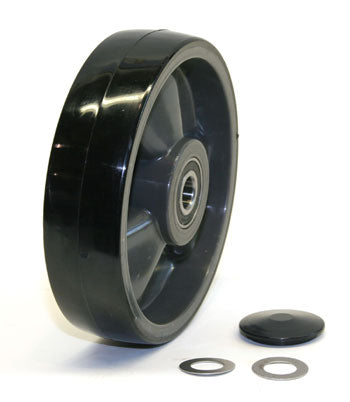
Poly Nylon Bearing for Wesco Manual Pallet Jack
WE 270785
Guaranteed Fit. Check fit with us before you buy. If we confirm it fits your machine and it doesn’t, we’ll exchange or refund it: no restocking fee, return shipping on us. How it works
Not sure it fits? Send us your make, model and serial number and we’ll check it before you buy.
Couldn't load pickup availability
- Expert support & fitment help
- 30-day returns
- Fast Shipping
Compatibility
|
Make |
|
|---|---|
|
Model |
- |
Visit our diagram page for part references to popular models
Product Description
The bearing with polyurethane and nylon construction delivers reliable performance for manual pallet jack wheel assemblies. Engineered for low-speed, high-load material handling environments, this bearing reduces friction while resisting wear and degradation. Ideal for Wesco manual pallet jacks and compatible equipment, it ensures smooth wheel rotation and long service life in warehouse and dock operations.
Specifications
Physical Specifications
| Material Composition | Polyurethane and Nylon |
| Bearing Type | Friction-Reducing Bushing |
| Load Environment | Low-Speed, High-Load Material Handling |
| Corrosion Resistance | Wear-Resistant Polymer Composition |
Compatibility
| Application | Manual Pallet Jack Wheel Hubs |
Frequently Asked Questions
Q: What are the specifications of the 20mm bore bearing (WE 270785)?
A: This is a bearing with polyurethane and nylon construction. It fits into wheel hub assemblies on Wesco manual pallet jacks to reduce friction and support smooth wheel rotation.
Q: What does the 20mm bore dimension mean?
A: The inner hole diameter of the bearing. A mismatch will cause loose or binding wheels.
Q: What is the advantage of polyurethane and nylon materials in this bearing?
A: Polyurethane and nylon materials provide low-friction rotation while resisting wear in material handling environments. These materials tolerate low-speed, high-load conditions typical of pallet jacks without degrading quickly.
Q: When should the 20mm bore bearing be replaced?
A: Replace the bearing if the wheel binds, exhibits grinding noise, or if the bearing is visibly cracked or deteriorated. A failing bearing increases wheel drag and accelerates hub wear.
Q: Is this bearing sealed?
A: The polyurethane and nylon construction provides wear resistance. Verify seal type and coverage in your equipment documentation. Unsealed bearings require more frequent inspection for contamination and debris.
Q: How long does this bearing typically last?
A: Bearing lifespan depends on usage frequency, load conditions, and maintenance. Regular inspection and proper storage in dry conditions extend bearing life. Replace when inspection shows cracking, excessive wear, or performance degradation.