

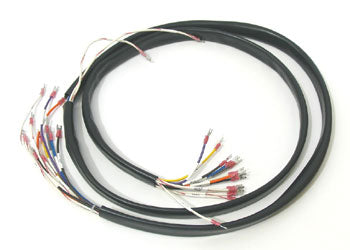
Wiring Harness for Crown Electric Lift Truck
CR 93389
Couldn't load pickup availability
- Expert support & fitment help
- 30-day returns
- Fast Shipping
Compatibility
|
Make |
|
|---|---|
|
Model |
|
Visit our diagram page for part references to popular models
Product Description
Wiring Harness
Specifications
Part Numbers & Compatibility
| Make | Crown |
Frequently Asked Questions
Q: What is the CR 93389 wiring harness and what does it connect?
A: The CR 93389 is a wiring harness assembly for Crown electric rider trucks. It routes power and control signals between the battery system, controller, pump motor, and operator controls.
Q: Which Crown truck models use the CR 93389 wiring harness?
A: The CR 93389 is compatible with Crown PE and PW series electric rider trucks. Verify your truck series and serial number against the compatibility documentation to ensure proper fit.
Q: What materials are used in the CR 93389 wiring harness?
A: The CR 93389 uses automotive-grade copper wire with weatherproof connectors. All connectors feature corrosion-resistant terminals suitable for warehouse environments.
Q: What symptoms indicate the CR 93389 wiring harness is failing?
A: Common failure signs include intermittent loss of motor power, erratic pump operation, non-responsive controls, or controller error codes. Physical signs include burned connector contacts, melted insulation, corroded wire strands, or loose terminals.
Q: How do I diagnose an electrical problem related to the CR 93389?
A: Test voltage at each harness connector using a multimeter to isolate which circuit is faulty. Check for continuity through the harness with the battery disconnected. Look for burned wire insulation, corrosion at connector terminals, or cracked connector housings.
Q: What is the expected lifespan of the CR 93389 wiring harness?
A: The CR 93389 typically lasts 5 to 10 years under normal operating conditions. Lifespan is shortened by moisture exposure, vibration damage, or over-current stress from electrical faults.
Q: How do I replace the CR 93389 wiring harness?
A: Replacement involves disconnecting the battery, removing the old harness, and installing the new one according to the manufacturer's instructions. Ensure all connections are secure and properly insulated.