

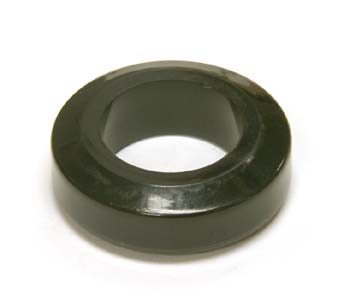
Rear Guide Roller
WW 97-28
Guaranteed Fit. Check fit with us before you buy. If we confirm it fits your machine and it doesn’t, we’ll exchange or refund it: no restocking fee, return shipping on us. How it works
Not sure it fits? Send us your make, model and serial number and we’ll check it before you buy.
Couldn't load pickup availability
- Expert support & fitment help
- 30-day returns
- Fast Shipping
Compatibility
|
Make |
- |
|---|---|
|
Model |
- |
Visit our diagram page for part references to popular models
Product Description
Rear guide roller
Frequently Asked Questions
Q: What is the WW 97-28 rear guide roller and what is its function?
A: The WW 97-28 is a guide roller installed on the rear axle of manual and electric pallet jacks. It prevents side-to-side movement of the pallet during lifting operations and aligns the load vertically. The roller contacts the face of the pallet to provide directional stability.
Q: What are the dimensions and specifications of the WW 97-28?
A: The WW 97-28 has a roller diameter of 2 inches and a width of 2.5 inches. The axle diameter is 0.5 inches. The roller is mounted on a bolt-down bracket and is designed to allow 0.5 inches of lateral play to accommodate pallet width variation between 48 and 52 inches.
Q: What is the material composition of the WW 97-28 rear guide roller?
A: The WW 97-28 roller is made from cast polyurethane with a hardness of 85 Shore A, mounted on sealed ball bearings. The axle is hardened steel, and the mounting bracket is zinc-plated steel. This design handles pallet contact forces while resisting wear in repeated loading cycles.
Q: How long does the WW 97-28 last and what causes replacement need?
A: The WW 97-28 typically lasts 2.5 to 4 years under normal warehouse use with regular maintenance. Replace it if the polyurethane surface shows flat spots or deep grooves, if the roller does not rotate freely, or if bearing noise is audible during operation.
Q: What pallet jack models and brands is the WW 97-28 compatible with?
A: The WW 97-28 is compatible with manual pallet jacks and electric pallet jacks from Crown, Toyota, Raymond, Yale, and Clark manufactured between 2008 and 2024. Verify your equipment rear axle configuration and bracket mounting pattern before ordering as spacing varies by model generation.