

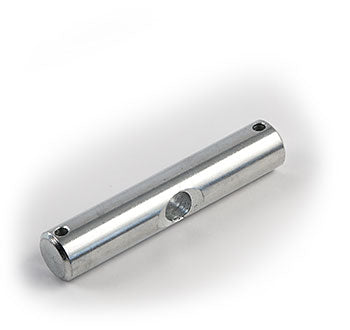
Yale Handle Axle for YA55 and YA55-PT Pallet Jack
YL 550091372
Couldn't load pickup availability
- Expert support & fitment help
- 30-day returns
- Fast Shipping
Compatibility
|
Make |
|
|---|---|
|
Model |
|
Visit our diagram page for part references to popular models
Product Description
Yale YL 550091372 is a handle axle component engineered with a 30 degree pin hole offset, specifically designed for the YA55 manual pallet jack. Manufactured from high-strength carbon steel and case hardened for durability, it transmits input motion from the handle to the lift/lower mechanism and is built to OEM Yale standards for continuous industrial use. No cross-references or alternate part numbers are available for this item.
Specifications
Material & Construction
| Material | High-strength carbon steel |
Part Numbers & Compatibility
| Make | Yale |
| Model | YA55, YA55-PT |
| Part Number | YL 550091372 |
| Manufacturer Part Number | YL550091372 |
Additional Specifications
| Pin Hole Orientation | 30 degree offset to ensure correct lever motion geometry |
| Hardening | Case hardened for durability |
| Function | Transmits input motion from the handle to the lift/lower mechanism |
| Standards | Built to OEM Yale standards for continuous industrial use |
Frequently Asked Questions
Q: Which models is the YL 550091372 compatible with?
A: The YL 550091372 is compatible with the Yale YA55 and YA55-PT manual pallet jack models.
Q: What material is the YL 550091372 made from?
A: The YL 550091372 is made from high-strength carbon steel and case hardened for durability.
Q: What should I do if the YL 550091372 becomes damaged?
A: If the YL 550091372 becomes damaged, it should be replaced immediately to ensure proper function and control.
Q: What is the purpose of the 30 degree pin hole offset on the YL 550091372?
A: The 30 degree pin hole offset is engineered to ensure correct lever motion geometry, translating handle input into the proper lift and lower motion path within the linkage system.