
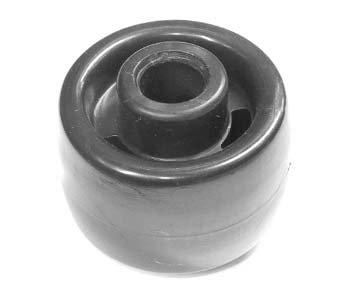
Hu-Lift HP25L entry roller - replacement
HL F108
Guaranteed Fit. If it doesn’t fit equipment that matches the listing on this page, we’ll exchange or refund it: no restocking fee, return shipping on us. How it works
Not sure it fits? Check it with us before you buy. Once we confirm the fit in writing, it’s guaranteed for your machine.
Couldn't load pickup availability
- Expert support & fitment help
- 30-day returns
- Fast Shipping
Compatibility
|
Make |
|
|---|---|
|
Model |
|
Visit our diagram page for part references to popular models
Product Description
Entry roller, part number HL F108, for Hu-Lift manual pallet jacks. Features polyurethane tread bonded to a steel hub for smooth fork entry during load engagement. Direct replacement equivalent to Global 334475 and suitable for continuous-duty material handling applications.
Compatibility: Fits Hu-Lift HP25L, manual pallet jacks.
Specifications
Material & Construction
| Material | Polyurethane on Steel |
Part Numbers & Compatibility
| Make | Hu-Lift |
| Model | HP25L |
| Part Number | HL F108 |
| Cross-Reference Part Numbers | Equivalent to Global 334475 |
Additional Specifications
| Roller Material | High-durability polyurethane bonded to steel hub |
| Hub Material | Machined carbon steel |
| Service Factor | 1.0 continuous for manual pallet jack usage |
Frequently Asked Questions
Q: What is the HL F108 entry roller used for?
A: The HL F108 is an entry roller for Hu-Lift manual pallet jacks. It features polyurethane on steel construction for fork entry during load engagement.
Q: Which pallet jacks is the HL F108 compatible with?
A: The HL F108 is compatible with Hu-Lift model HP25L.
Q: What materials are used in the HL F108 construction?
A: The HL F108 features a polyurethane tread bonded to a steel hub. This high-durability construction is suited to material handling applications.
Q: How do I know if the HL F108 is the right replacement for my pallet jack?
A: The HL F108 is a replacement for compatible Hu-Lift manual pallet jacks listed for this part. It is also a direct equivalent to Global part number 334475.
Q: Is the HL F108 suitable for continuous use?
A: Yes, the HL F108 is designed for continuous-duty material handling and frequent use.